The RAM Crisis Hit India Hard — But Something Just Changed
You open Amazon to buy RAM for your new PC build, and your jaw drops. A 16GB DDR5 kit that cost ₹6,500 in early 2025 is now listed at ₹18,000 or more. You close the tab, hoping it’s a glitch. It isn’t.

The global memory crisis of 2025–2026 has been brutal, and Indian buyers have felt every bit of it — plus the extra sting of import duties and a weaker rupee. But in the last few weeks of March and early April 2026, something shifted. Prices are coming down — not dramatically, but enough to spark a real question: is now the time to finally buy?
In this article, we’ll break down exactly what’s happening, why prices dropped, what Indian buyers should realistically expect, and — most importantly — what you should actually do right now.
Where RAM Prices Stand Right Now
Global DDR5 prices have dropped roughly 20% from their March 2026 peak. That sounds like great news, but here’s the reality: prices are still 3 to 4 times higher than they were in early 2025. A 16GB DDR5 kit that used to cost under ₹7,000 is still hovering around ₹24,000–₹28,000 on Indian e-commerce platforms.
Indian buyers also face a structural disadvantage. Every RAM kit imported into India carries 18% GST plus customs duty, making Indian prices consistently 15–25% higher than equivalent US or European prices after currency conversion. So when you read a headline saying “DDR5 prices dropped 20%,” the starting point in India was already much higher. The drop helps, but it doesn’t bring us anywhere near affordable territory.

Why Did RAM Prices Explode in the First Place?
The root cause is artificial intelligence. Companies like OpenAI, Google, Meta, and Microsoft dramatically increased their demand for memory to power AI data centres. The world’s three biggest memory manufacturers — Samsung, SK Hynix, and Micron — discovered that building High Bandwidth Memory (HBM) for NVIDIA’s AI chips is far more profitable than making consumer DDR5. So they quietly shifted their factories.
The result was a supply crunch unlike anything the PC hardware market had seen before. By early 2026, a 16GB DDR5 kit that cost ₹12,000 in mid-2024 was selling for ₹25,000 or more. The supply hasn’t disappeared — it’s just going to AI infrastructure instead of your PC.
What Caused the Recent Drop?
Two events in late March 2026 shook the market. First, Google released a compression algorithm called TurboQuant, which can reportedly reduce AI memory requirements by up to six times for certain inference workloads. This spooked investors — if AI systems need less RAM, those massive memory contracts could shrink. Samsung, SK Hynix, and Micron stocks all dropped over 20% in a matter of days, and retail prices followed.

Second, reports surfaced that OpenAI’s expected large-scale memory procurement may not fully materialize as planned. Since manufacturers had already restructured supply chains around that anticipated demand, the uncertainty hit market confidence hard.
It’s important to understand what this drop actually means, though. These are stock-market reactions, not supply chain fixes. The underlying shortage has not been resolved. Indian prices on Amazon.in and Flipkart reflect global trends with a delay of a few weeks, so expect modest reductions on popular kits — but not a crash back to 2024 levels.
DDR4 vs DDR5 in India: Which Should You Buy?
The practical advice is straightforward: if your motherboard supports DDR5 — which includes Intel 12th generation and newer, and AMD AM5 platforms — you should buy DDR5. It offers better long-term compatibility, and at current prices it often costs the same or less per gigabyte than DDR4. DDR4 is a dying standard and is currently offering terrible value for money.
If you have an older platform that only supports DDR4, seriously consider whether it is worth upgrading the entire platform rather than spending ₹16,000–₹22,000 on 32GB of DDR4 for hardware that is several years old.
Current RAM Prices in India (April 2026)

The following are estimated price ranges based on current global market conditions and typical India import premiums. Always check live listings on Amazon.in and Flipkart as prices are shifting frequently right now.
| Type | Capacity | Approx. India Price | Verdict |
|---|---|---|---|
| DDR4 3200MHz | 16GB | ₹8,500 – ₹11,000 | Only if you are on a strict budget |
| DDR4 3200MHz | 32GB | ₹20,000 – ₹24,000 | Avoid |
| DDR5 4800MHz | 16GB | ₹18,000 – ₹21,000 | Acceptable entry point |
| DDR5 5600MHz | 32GB (2×16) | ₹36,000 – ₹42,000 | Best option if you must buy now |
| DDR5 6000MHz CL30 | 32GB (2×16) | ₹38,000 – ₹45,000 | Overpriced — wait if possible |
| DDR5 6000MHz CL30 | 64GB (2×32) | ₹56,000 – ₹60,000 | Definitely wait |
Should You Buy RAM Now or Wait?
This depends entirely on your situation, and there is no single right answer for everyone.
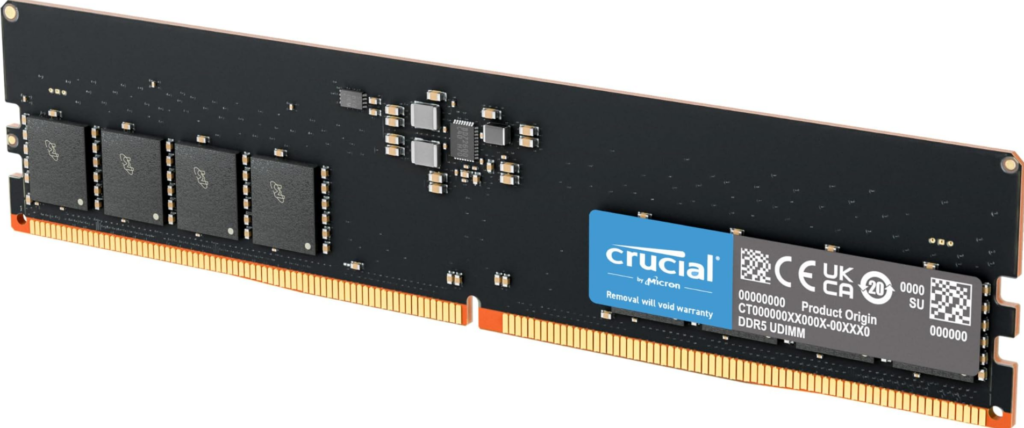
If you need a PC right now for work, college, or freelancing and cannot function without one, buy the minimum you need. A DDR5 5600MHz 16GB kit will get you up and running, and you can add another stick later when prices fall. Do not overbuy at today’s prices.
If you are a content creator or video editor who genuinely needs 32GB or more to do your job, the painful reality is that you may have to buy now. In that case, DDR5 5600MHz 32GB is the most reasonable choice available. Avoid the premium 6000MHz kits — the performance difference does not justify the price gap in the current market.
If you are a PC enthusiast or gamer whose current machine still works, wait. Your patience will be rewarded. Prices are expected to fall further in the second half of 2026, and there is no reason to pay peak prices when better options are likely just a few months away.
If you are managing office IT or small business workstations, optimize what you have before buying anything new. A clean Windows installation, removing bloatware, and closing background processes can deliver surprisingly large performance improvements without spending a rupee.
Pro Tips for Indian Buyers
Set price alerts on Amazon.in and Flipkart. The Keepa browser extension works with Amazon.in and shows you a full price history chart for any product. This tells you whether a “sale” price is actually lower than the recent average or just marketing. For Flipkart, sites like PriceHistory.in offer similar tracking. Set an alert for your target kit and let it notify you when the price drops.
Buy DDR5 over DDR4, even if DDR5 costs slightly more upfront. DDR4 pricing right now is irrational. DDR5 is the current and future standard, and on most metrics it currently offers equal or better value per gigabyte.
Check local IT markets. Nehru Place in Delhi, Lamington Road in Mumbai, and SP Road in Bangalore occasionally have stock at 10–20% below Amazon.in prices. Just verify the warranty terms carefully, since grey market products sometimes come with limited or no manufacturer warranty.
Use no-cost EMI if you must buy now. Both Amazon.in and Flipkart offer no-cost EMI through most major Indian banks. If you need 32GB today, spreading the cost over 6–12 months at 0% interest reduces the immediate financial pain significantly.
Do not import from the US to save money. US prices look tempting, but once you add customs duty (typically 10–20%), GST (18%), and shipping costs, the savings almost always disappear. You also lose easy warranty claims in case something goes wrong.
When Will RAM Prices Return to Normal in India?
This is the question every Indian buyer wants answered precisely. The honest answer is that no one knows for certain, but the analyst consensus points in a clear direction.
Between April and June 2026, prices are expected to stay broadly sideways with modest drops from the recent peak. The TurboQuant-driven correction may give some further relief, but the structural supply shortage has not changed.
Between July and September 2026, new manufacturing capacity from Samsung’s Pyeongtaek P4 fab and SK Hynix’s M15X facility is expected to start flowing into the supply chain. This could bring another 10–20% reduction from current prices — not enough to make things affordable, but a meaningful improvement.
In Q4 2026, the best-case consumer scenario plays out if AI demand continues to soften and supply increases simultaneously. Prices could become noticeably more reasonable, though still above 2024 levels.
The analyst consensus for genuine normalisation — a return to something approaching early 2025 pricing — is 2027 to 2028. Firms like Gartner and TrendForce have consistently pointed to this timeline. The structural shift of DRAM supply toward AI infrastructure is not going to reverse quickly.
The bottom line: if you can wait until August or September 2026, you will almost certainly get a better price than today. If you cannot wait, buy DDR5 5600MHz and move on.
Frequently Asked Questions
Is RAM price dropping in India in April 2026?
Yes, slightly. Global DDR5 prices have dropped roughly 20% from their March 2026 peak, and this is beginning to reflect on Amazon.in and Flipkart with a few weeks of delay. However, Indian prices are still 3–4 times higher than early 2025 levels. The drop is real but modest, and prices remain very expensive by historical standards.
Should I buy RAM now or wait in India?
It depends on urgency. If you need a PC for work or studies right now, buy DDR5 5600MHz 16GB or 32GB — it is the best value available. If your current machine works and you can wait, hold off until at least August–September 2026 when prices should be noticeably lower. Do not panic-buy at today’s inflated prices unless you have no choice.
What is the cheapest DDR5 RAM price in India right now?
As of April 2026, entry-level DDR5 4800MHz 16GB sticks start at approximately ₹9,000–₹12,000 on Amazon.in and Flipkart. DDR5 5600MHz 32GB kits (2×16GB) are priced roughly ₹20,000–₹28,000. Prices are changing frequently — always check live listings before buying.
What caused the RAM price crisis in India and globally?
The root cause is AI demand. Companies like OpenAI, Google, Meta, and Microsoft massively increased their memory consumption for AI data centres. Samsung, SK Hynix, and Micron prioritised far more profitable High Bandwidth Memory for AI chips over consumer DDR4 and DDR5. The supply crunch sent retail prices skyrocketing from mid-2025 onwards. Indian buyers pay extra on top of that due to import duties and GST.
Will RAM prices return to 2024 levels in India?
Most industry analysts say not before 2027, with some extending the timeline to 2028. New manufacturing capacity is being built but takes years to come online. AI memory demand is not disappearing. The realistic scenario for Indian buyers is a gradual 30–50% reduction from current peak prices by late 2026 to early 2027 — meaningful progress, but not a return to ₹6,000–₹7,000 for a 16GB DDR5 kit.
Which is better to buy in India in 2026 — DDR4 or DDR5?
DDR5, clearly. DDR4 is currently more expensive per gigabyte in many cases, and it is a platform that new CPUs and motherboards are moving away from. If your motherboard supports DDR5, buy DDR5. If you are stuck on an old DDR4 platform, consider upgrading the entire system rather than spending heavily on DDR4 for aging hardware.
How do I track RAM prices in India in real time?
Use the Keepa browser extension for Amazon.in to see price history charts and set drop alerts. For Flipkart, try PriceHistory.in or similar Indian price-tracking websites. The subreddits r/indiangaming and r/buildapc_india are also active communities where members regularly post deal alerts in real time.
Final Verdict
The RAM price drop of April 2026 is real — but it is not a reason to celebrate yet. Global DDR5 prices have fallen roughly 20% from their peak, and Indian prices are starting to reflect this with the usual delay. However, we are still paying three to four times what we paid in early 2025, and there is no quick return to those levels on the horizon.
The smartest move for most Indian buyers right now is simple: wait if you can, buy DDR5 5600MHz if you cannot. Avoid DDR4 entirely at current prices. Set price alerts on Amazon.in, be patient, and remember that the market is finally moving in the right direction — just slowly.
Check Amazon.in and Flipkart weekly. The months ahead could bring meaningful drops for buyers who are willing to hold out a little longer.